
Traffic Court Records in Wisconsin
Wisconsin sorts traffic cases by the law cited and by which court gets the ticket. State-law criminal traffic cases and traffic forfeitures may be filed in the Wisconsin Circuit Courts. There they show up in Wisconsin Circuit Court Access, or WCCA. Local tickets are different. A speeding, parking, or ordinance citation goes to the municipality's municipal court. That court keeps its own docket. Some municipal courts serve several municipalities at once, so their reach does not always follow county lines.
The court traffic record lists the citation, the events, the response, and the disposition. Driver-license status and driving-record details live elsewhere. They sit with the Wisconsin Department of Transportation's Division of Motor Vehicles, or WisDOT DMV. A vehicle-registration hold can also arise through a separate program. So begin any Wisconsin traffic case search with the court printed on the citation. From there, follow the record to the right local or statewide channel.
A Wisconsin Municipal Ticket May Not Appear in WCCA
WCCA indexes Wisconsin circuit-court cases only. It is not a master search for every traffic citation in the state. A state-law citation may open a circuit criminal or forfeiture case. But a ticket written under a local ordinance usually stays with the municipal court that issued it. Wisconsin offers no unified statewide search for municipal ticket numbers. A citation missing from WCCA can still be active in a local court record.
Check the court name on the ticket. Or look it up through the Wisconsin Municipal Court Directory. That official directory lists municipal courts across the state. It includes joint courts that serve several cities, villages, or towns. The city name or county alone may not identify the office holding the record. If the citation does not turn up in the named court's online service, call its clerk or local authority for the right search path.
A local traffic citation follows that court's ordinance jurisdiction, which may extend past one municipality's borders.
Statewide Citation and License-Hold Systems
Wisconsin runs several related state systems. None of them adds up to one citation search. WCCA, supported by the Consolidated Court Automation Programs (CCAP), covers traffic matters filed in circuit court. The municipal directory routes local ordinance tickets. WisDOT handles driver records. The Traffic Violation and Registration Program (TVRP) concerns certain unpaid vehicle-related judgments. A license hold, court balance, or registration flag is not the same thing as a court docket entry.
| System | What It Holds | Run By |
|---|---|---|
| WCCA circuit case search | Public filed circuit traffic cases; no guarantee for municipal citations | Wisconsin Court System / CCAP |
| Municipal ticket search | Local ordinance citations in the named court; no unified statewide ticket search | Municipal court or local authority |
| Failure-to-appear or unpaid-forfeiture action | Case-specific default or court-reported driver-license action under statute | Originating court and WisDOT, when statutory conditions apply |
| TVRP | Eligible parking, nonmoving forfeiture, and towing or storage charges that may affect vehicle registration | Participating local authority and WisDOT |
| Driver record and license status | License status, convictions, points, suspensions, and driving history | WisDOT Division of Motor Vehicles |
The citation route in Wisconsin depends on the filing court. Was the case filed in circuit court or municipal court? That answer controls where the record sits. An unpaid WCCA balance alone does not prove a Wisconsin license suspension or registration hold.
Search a Wisconsin Circuit Traffic Case in WCCA
For a circuit citation, WCCA Advanced Search takes a citation number. It lets you narrow by issuing agency, county, offense-date range, DA case number, case number, party name, case type, and filing or disposition dates. There is no statewide "Court" field for citation searches. The county selector stands in for the circuit jurisdiction. Agency and date fields help when a ticket number alone returns nothing.
The live application offers search and reset controls, though exact citation-formatting rules are not stated. Results may show the citation number and issuing agency. They may also show county, case number, type or status, and offense date. The free WCCA search is not a municipal ticket index. A circuit citation that fails to appear? Confirm the court and the identifier printed on the ticket.
| Citation number | Searches a Wisconsin circuit citation when one is indexed; not a universal municipal ticket number lookup. |
|---|---|
| County and issuing agency | Narrows to the Wisconsin county circuit record and the agency associated with the citation. |
| Offense date and District Attorney (DA) number | Helps locate Wisconsin traffic or criminal-traffic filings when these details are known. |
| Case type and status | Filters among available circuit categories and recorded case states. |
| Case number or party name | Offers another route to a filed case when citation details are incomplete. |
Note: WCCA has no statewide municipal-court field, since local ordinance tickets run on a separate court system.
How to Look Up a Wisconsin Traffic Ticket
Three details on the citation itself unlock most Wisconsin traffic lookups: the issuing court, the citation number, and the offense date. A charge under state law becomes a traffic forfeiture case in Circuit Court. WCCA covers those dockets. Municipal courts handle local ordinance citations. No single statewide search reaches every one of those tickets.
For circuit matters, the case-search steps walk through WCCA queries by name or case number, with a county filter when you know it. The county directory leads to the Wisconsin county layer for circuit records. For a municipal ticket, the state municipal-court directory points to the right local court. County clerks also answer by counter, phone, mail, or email as their local rules permit. Courthouse terminals give public WCCA access.
The official municipal court sites and clerk directory lists each local court's website and contact information for docket questions.
A specific ticket still belongs to the court identified on the citation.
- Read the court name, issuing agency, citation number, and date from the ticket or notice.
- If it is a Wisconsin circuit case, search WCCA by citation number, county, agency, offense date, or party name.
- If it is a municipal citation, use the named court or the official municipal-court directory; call the court if no online result is available.
- Use the ticket and filed notice for the response deadline and appearance instructions.
Never guess a Wisconsin traffic deadline; the ticket and its issuing court control the response date.
A Wisconsin Traffic Calendar Is Not the Citation
Know the case first. The WCCA Calendar is then the quickest way to find a Wisconsin circuit-court traffic setting. Pick a county, a court official, and a date range. There is also an optional traffic-only filter. The officials you can choose from change with the county you select. Calendar mode covers court events or noncourt events. A match can return the date and time, case number, caption, activity, and court location.
The filter has limits, though. It will not search by citation number. It also does not list every municipal court calendar. So for a case-specific date, the filed notice or court order is still the direct record. Treat a Wisconsin calendar entry as an index: it may lag behind a recent change. A listed setting may conflict with a notice. Then call the Clerk of Circuit Court or local court staff to confirm. The calendar shows no payment or disposition. For that, read the case history or ask the issuing court.
Paying or Contesting a Ticket in Wisconsin
Your Wisconsin ticket itself spells out the choices and the deadline. Paying an eligible circuit-court obligation resolves that payment under Wisconsin court procedure. Contesting is different. It takes a not-guilty response and a hearing route set by the issuing court. Municipal and circuit tickets can run through separate channels. Paying a forfeiture, entering a plea, and recording a conviction are not identical outcomes for every ticket type.
The Wisconsin circuit-court online payment system finds eligible obligations through a case search. Juvenile or confidential amounts may be hidden, and processor fees apply. A municipal ticket is different. It has to be paid or contested through the local court or authority named on it, not this system. Ask the court to confirm that a payment posted. Or ask what filing you need to contest.
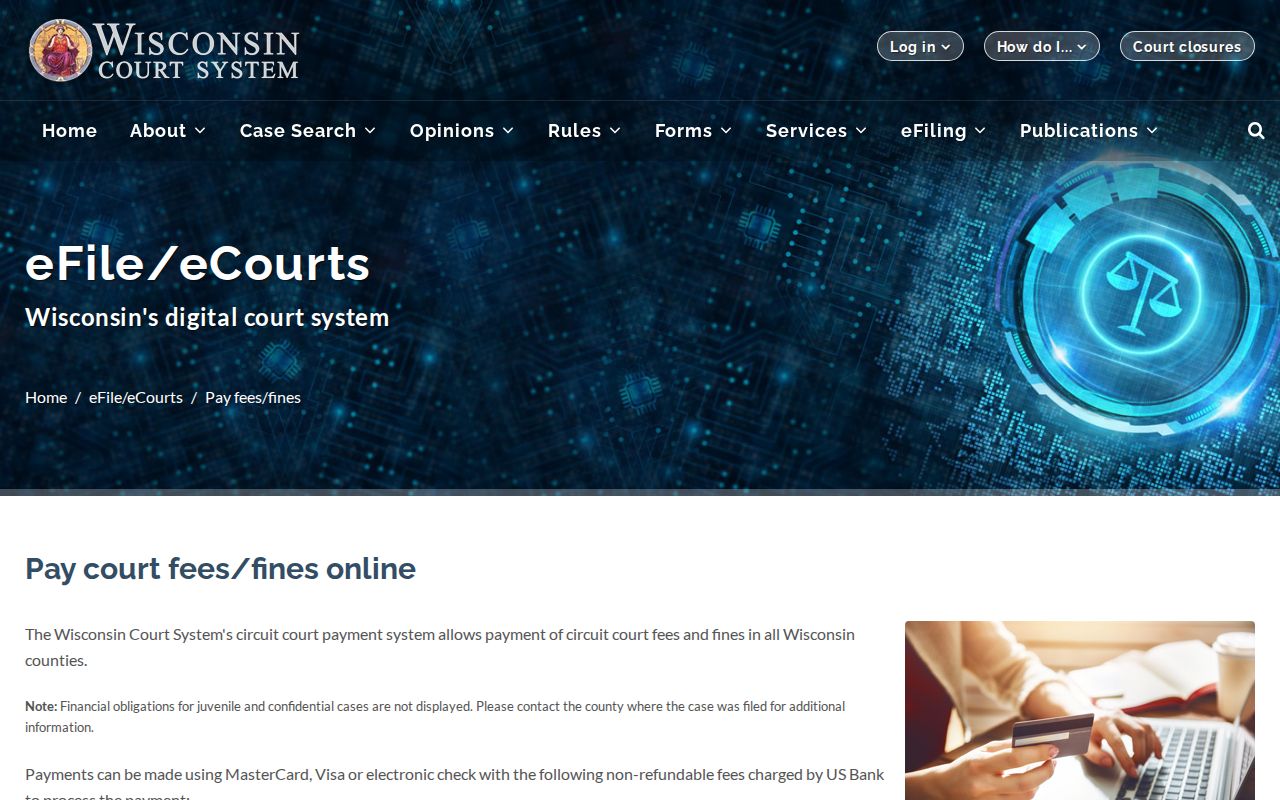
A payment result is not the docket, and it is not proof that a local ticket sits in WCCA.
| Paying the Ticket | Contesting the Ticket |
|---|---|
| Resolve the amount due through an eligible Wisconsin circuit payment route or the named municipal court. | Enter a not-guilty response and follow the issuing court’s hearing instructions. |
| Use the date and payment terms stated on the ticket or court notice. | Use the response deadline and method printed on the ticket or notice. |
| Payment or forfeiture resolution is recorded in the Wisconsin court’s process. | The court sets a hearing or trial path; local procedures differ. |
Missed date or unpaid forfeiture: Under Wisconsin’s Wis. Stat. § 345.37, failure to appear can lead to a warrant or a no-contest disposition or judgment in covered cases, depending on the case type and whether a deposit was made. Under Wis. Stat. § 345.47, a court-reported unpaid-forfeiture suspension can last one year or until payment, subject to statutory conditions. A WCCA balance alone does not establish that a hold issued.
Note: Statutory conditions, not a balance field alone, decide whether Wisconsin reports a suspension.
TVRP Can Affect Wisconsin Vehicle Registration
WisDOT runs the Traffic Violation and Registration Program (TVRP) for Wisconsin. Participating local authorities report eligible unpaid items. These include parking citations, nonmoving traffic-forfeiture judgments, and towing or storage charges. TVRP works on vehicle registration only. It is not a public case search. It is also not a driver-license suspension for every traffic ticket. The local authority keeps control of citation payment and contest instructions.
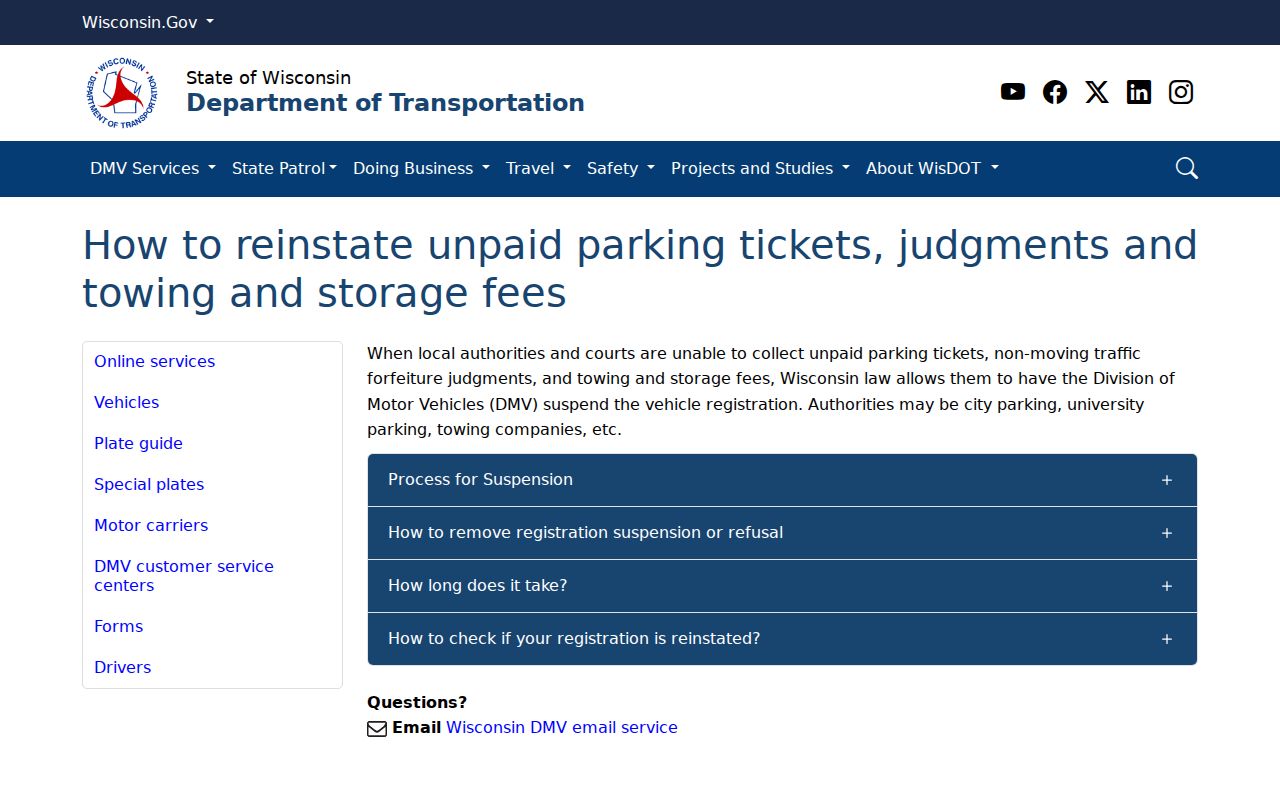
TVRP is a registration workflow, separate from the municipal or circuit traffic docket.
Here is how it works. The participating Wisconsin local authority in the program sends two notices. Say the judgment is still unpaid after 28 days. Or say the person did not appear. That authority may then ask WisDOT to suspend the ticketed vehicle's registration or refuse registration of other vehicles the same person owns. A $3 online or $5 paper submission fee applies to participating authorities and may be added to the amount due. Take any unresolved Wisconsin TVRP notice to the authority named in it.
Registration is not the docket. Wisconsin’s TVRP may affect vehicle registration, while the local court or municipality keeps the citation record and decides payment or contest steps.
After payment, the local authority must notify DMV within three business days. Online satisfaction can update in real time. Paper processing generally takes seven to ten days, so a registration issue may not clear the moment a court payment is made.
Court Traffic Record vs Driver Record
Wisconsin keeps two systems separate. The court case lives with the municipal court or Clerk of Circuit Court. That citation docket holds the charge, events, response, disposition, and financial entry. WisDOT DMV holds the driver-license status and driving history. A conviction or court-reported action can affect a DMV record. But that event list is not the driver record. A court balance alone does not establish that any license action occurred.
| Court Traffic Record | Driver Record | |
|---|---|---|
| Kept by | Wisconsin municipal court or county Clerk of Circuit Court | WisDOT Division of Motor Vehicles |
| Shows | Citation, court number, case events, plea or response, disposition, and court obligations | License status, convictions, points, suspensions, and driving history |
| Search route | Wisconsin WCCA for circuit cases; the named municipal court for local tickets | WisDOT’s own-license status check, which is not a ticket or court-case search |
The WisDOT own-license status check asks for your license or ID and identity details. It does not locate a traffic case. For a circuit citation, use WCCA and the county directory. For a municipal ticket, ask the issuing court. So do not read a Wisconsin driver-history record as the full court file. It is not the wording of a disposition either.
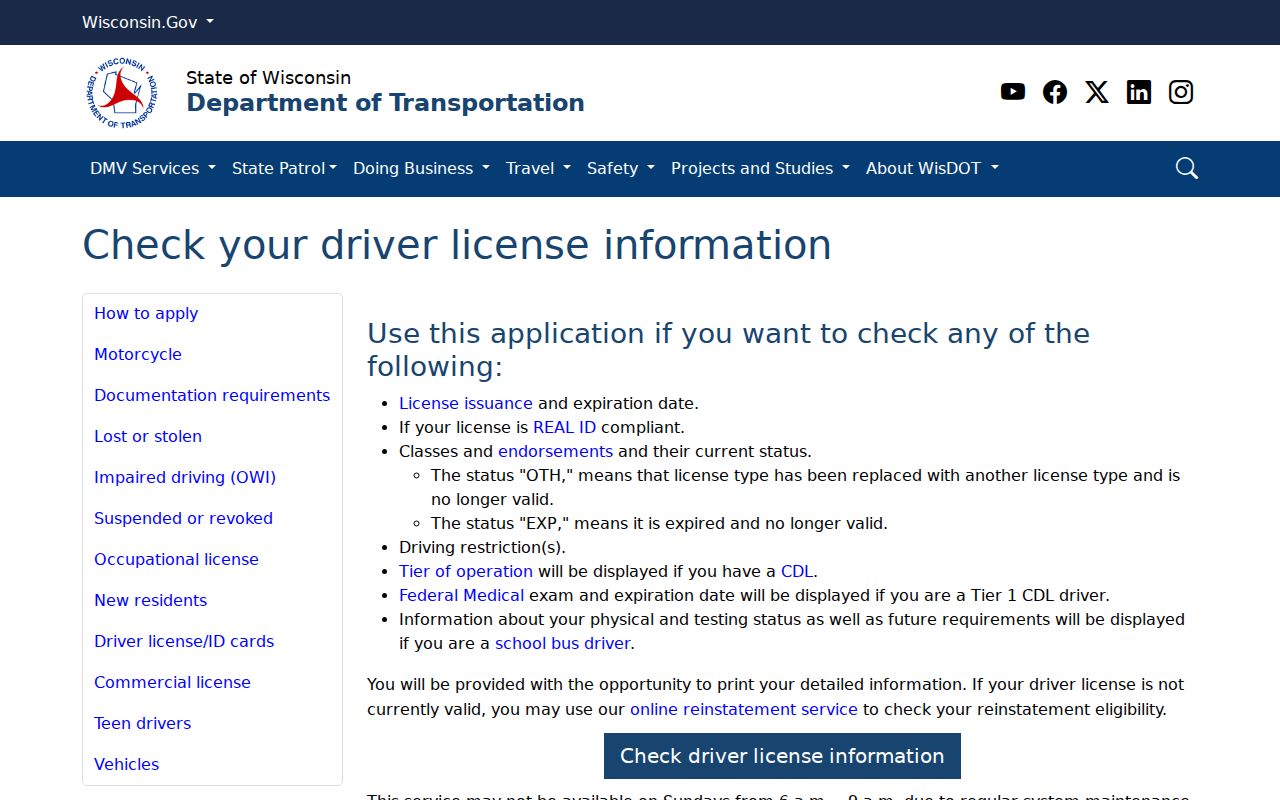
It answers license questions, but it will not find a citation or open another person's court file.
Wisconsin Photo-Radar Limits Apply to Speed Enforcement
Wisconsin's photo-enforcement restriction is narrow: it targets photo-radar speed enforcement. Wis. Stat. § 349.02(3) and the WisDOT traffic-safety FAQ spell out that limit. Do not stretch it into a broader claim. Not every camera technology or local traffic-control use is barred.
A Wisconsin citation may name the issuing agency, law, court date, and deposit. Yet the ticket image may not be online. Use WCCA for circuit filings, or the named municipal court for local ordinance cases.
Note: The photo-radar rule concerns speed enforcement. It does not answer where every traffic citation is recorded.